
7 Reasons the Abbott Architect i1000sr is the Ultimate ER Triage Analyzer
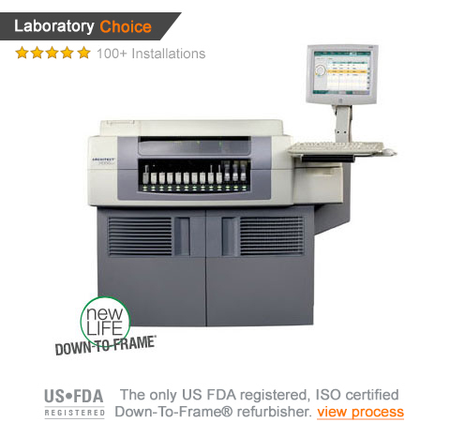
In an acute care setting, the laboratory is the engine of the Emergency Department. When a patient arrives with suspected acute myocardial infarction (AMI) or pulmonary embolism, emergency physicians rely on the rapid turnaround of critical immunoassays like high-sensitivity troponin and D-Dimer.
However, running these highly sensitive emergency markers on batch-based immunoassay systems often leads to dangerous workflow bottlenecks. To eliminate these delays, decentralized hospitals and STAT labs turn to the Abbott Architect i1000SR.
Here are 7 operational reasons why this platform is considered the gold standard for emergency triage testing.
The Architect i1000SR Advantage
1. True Continuous STAT Loading
Unlike batch analyzers that force technicians to pause an active run to load an emergency sample, the i1000SR features a three-dimensional sample handler. Technologists can load STAT cardiac samples at any moment, and the system instantly prioritizes them over routine tests without interrupting the workflow.
2. CMIA Technology for Extreme Sensitivity
Emergency cardiac markers require absolute precision at ultra-low concentrations. The Architect uses Chemiluminescent Microparticle Immunoassay (CMIA) technology, providing the exceptional low-end sensitivity required to accurately rule-in or rule-out myocardial infarctions using next-generation troponin assays.
3. Zero Sample Carryover
When alternating between high-concentration tumor markers and low-concentration cardiac markers, cross-contamination can trigger fatal false positives. The i1000SR utilizes patented wash cups and a strictly engineered fluidic pathway to guarantee sample-to-sample carryover of less than 0.1 parts per million.
4. Automated Clot and Bubble Detection
Emergency blood draws are frequently rushed, leading to poor sample quality. The i1000SR is equipped with advanced pressure sensors that instantly detect micro-clots and bubbles in the sample tube. It flags the operator immediately, preventing the analyzer from wasting expensive reagents on a compromised aspiration.
5. Expansive Onboard Reagent Capacity
With space for 65 onboard reagent positions, the i1000SR allows a laboratory to consolidate its entire emergency and routine immunology menu onto a single system. Reagents are actively cooled, maximizing their onboard stability and minimizing daily dead-volume waste.
6. Consistent Throughput Reliability
Operating at a maximum capacity of 100 tests per hour, the i1000SR easily absorbs the erratic, high-volume spikes associated with emergency room surges, ensuring that TAT remains consistent even during peak admission hours.
7. Compact Footprint for Decentralized Settings
Despite housing the exact same robust technology found in Abbott's massive floor-standing units, the i1000SR is engineered with a highly compact footprint. This makes it the perfect primary analyzer for space-constrained rapid response labs physically located adjacent to the ER.
Cost-Effective Upgrades with Refurbished Equipment
Equipping your rapid response lab to handle high-sensitivity cardiac triage does not require exhausting your capital equipment budget.
Through Diamond Diagnostics, acute care facilities can integrate globally trusted, certified refurbished immunoassay systems. Acquiring a refurbished Abbott Architect i1000SR instantly grants your laboratory premium CMIA technology and continuous STAT capabilities at a highly accessible acquisition cost. Every analyzer is subjected to a Down-To-Frame® refurbishment protocol, ensuring it operates with the absolute life-saving precision your emergency department demands.