
Roche LightCycler 480 II: 96-Well vs. 384-Well, Which Format Fits Your Lab?
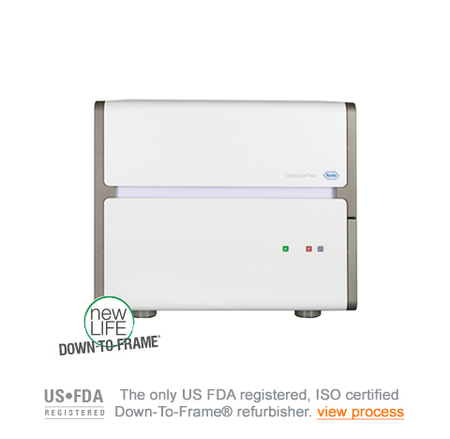
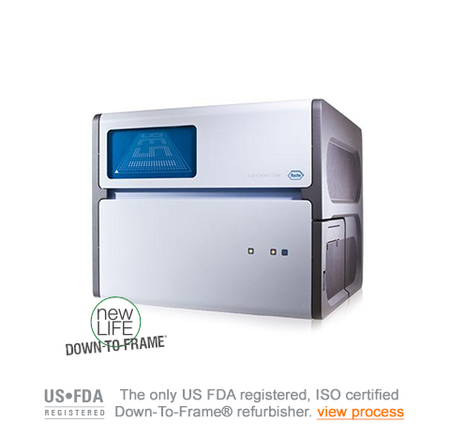
In real-time PCR, the plate format drives everything: how many samples fit in a run, how much reagent each reaction consumes, and how much liquid-handling precision your workflow needs. Choose a format that does not match your sample volume and you either waste reagent or leave capacity unused.
The Roche LightCycler 480 Instrument II is built around exactly that choice, with a thermal block available in a 96-well and a 384-well version.
What Both Versions Share
Roche describes the LightCycler 480 Instrument II as a rapid, plate-based thermal block cycler with integrated real-time detection. Its Peltier-based silver block is designed for well-to-well temperature homogeneity, and its optical arrangement collects signal uniformly across the plate, so analysis does not depend on where a sample sits. The platform supports mono- or multicolor applications and multiplex protocols for gene detection, gene expression analysis, and genetic variation analysis. Both versions are benchtop units, listed by Diamond at about 57 cm wide, 59 cm deep, and 56 kg.
1. LightCycler 480 II 96-Well: Flexible Volumes for Smaller Batches
The 96-well block supports reaction volumes of 10 to 100 μL, with a maximum heating rate of 4.4 °C per second. That larger reaction volume range suits labs running smaller batches, developing and validating assays, or working with sample types that need more volume per well.
2. LightCycler 480 II 384-Well: More Samples per Run, Less Reagent per Reaction
The 384-well block works with reaction volumes of 5 to 20 μL and a maximum heating rate of 4.8 °C per second. Because it offers four times as many wells per run at a much smaller volume per reaction, it fits labs processing large sample numbers or trying to reduce reagent use per reaction. Roche notes that the instrument can also be integrated into a robotically controlled, automated high-throughput workflow.
3. How to Choose
Start with three questions: how many samples you typically run at once, how much reagent budget you want to commit per reaction, and whether your workflow can reliably dispense the small volumes a 384-well plate calls for. Smaller or more varied runs usually point to the 96-well block, while high sample counts and reagent savings point to the 384-well block.
One more point worth confirming before you buy: Roche's product listing designates the LightCycler 480 Instrument II for research use (RUO), so labs planning clinical applications should confirm that their intended assay and regulatory pathway fit. For more background on the platform, see our guides to the LightCycler 480 II real-time PCR system and how hospitals use the LightCycler 480 II.
Find the Right LightCycler Format for Your Lab
At Diamond Diagnostics, we help laboratories match molecular testing platforms to their real sample volumes and workflows.
Whether you need the Roche LightCycler 480 II 96-well or the Roche LightCycler 480 II 384-well, every system we supply undergoes our complete Down-To-Frame® refurbishment protocol, including full disassembly, component-level restoration, and rigorous multi-level quality control validation.