

Urinalysis and toxicology screening are among the most frequently performed diagnostic tests in clinical medicine. Whether evaluating a patient for urinary tract infections, monitoring kidney function, or performing employment drug testing, laboratories require fast, reproducible results.
However, relying on manual visual inspection for dipstick urinalysis introduces significant subjectivity, variation between technicians, and clerical transcription errors. To enforce strict quality control and maximize throughput, modern diagnostic facilities rely on automated systems like the Siemens Medical Clinitek Advantus and the Siemens Viva series.
Here are 5 ways automated urine chemistry and toxicology platforms transform daily laboratory workflows.
1. Elimination of Subjective Color Reading Errors
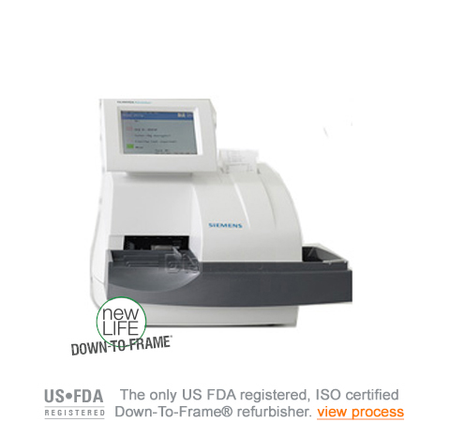
Manual urine strip reading is inherently subjective. Ambient room lighting, varying technologist eyesight, and inconsistent timing can alter the interpretation of crucial parameters like leukocytes, nitrites, and protein. The Siemens Medical Clinitek Advantus utilizes advanced spectrophotometric optics to read test strips at exact, standardized time intervals, ensuring consistent, objective readings across every shift.
2. High-Throughput Processing for Busy STAT Labs
Processing high volumes of routine urinalysis manually creates severe benchtop bottlenecks. The Clinitek Advantus processes up to 500 test strips per hour, allowing busy urgent care centers and hospital laboratories to clear STAT backlogs rapidly. Technologists simply place the strip onto the automated loading area, allowing the system to handle timing, reading, and digital result reporting.
3. Dedicated Benchtop Drug Testing with the Siemens Viva
Occupational health centers and toxicology reference labs require specialized, automated analyzers for drug-of-abuse screening. The Siemens Viva system (including the Viva E) provides a compact, dedicated benchtop solution for Syva EMIT drug screening assays. It automates qualitative and semi-quantitative screening for amphetamines, opiates, cannabinoids, and therapeutic drugs without tying up a primary clinical chemistry analyzer.
4. Automated Quality Control & LIS Integration
Manual logging of urinalysis quality control (QC) is time-consuming and vulnerable to compliance audit flags. Automated urinalysis systems enforce mandatory QC protocols, blocking sample processing if controls fail or expire. Furthermore, direct interface capability with your Laboratory Information System (LIS) automatically transmits patient results, completely eliminating manual data entry mistakes.
5. Cost-Effective Consolidation via Certified Refurbishment
Upgrading your point-of-care urine chemistry or expanding your toxicology screening menu does not require a massive capital expenditure. Acquiring certified refurbished benchtop equipment allows outpatient clinics and regional reference labs to integrate gold-standard Siemens automation while preserving capital for critical core-lab infrastructure.
Equip Your Laboratory with Automated Urinalysis
At Diamond Diagnostics, we help facilities modernize their urine chemistry and drug screening departments cost-effectively.
From the high-volume Siemens Medical Clinitek Advantus to dedicated toxicology platforms like the Siemens Viva E, every system undergoes our stringent Down-To-Frame® refurbishment protocol. We calibrate optical sensor arrays, overhaul fluidic channels, and run multi-level controls to guarantee day-one analytical confidence.