
5 Reasons High-Volume Labs are Upgrading to Siemens Atellica Systems
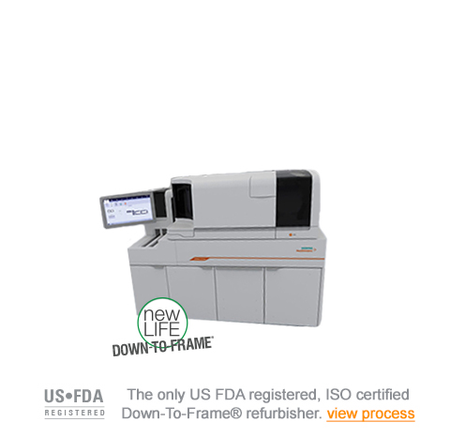
The modern core laboratory is facing an unprecedented operational crisis. Testing volumes are hitting record highs, while severe shortages of certified medical technologists force remaining staff to do more with less.
To survive this pressure, reference hubs and hospital networks can no longer rely on standalone machines that require constant manual intervention. They require intelligent, integrated automation. Enter the Siemens Atellica Solution. Engineered specifically to give control back to the operator, the Atellica platform integrates clinical chemistry and immunoassay testing into a single, highly autonomous track.
Here are the 5 reasons why high-volume laboratories are rapidly transitioning to Siemens Atellica Systems.
1. Revolutionary Magline Transport Technology
Traditional track systems use slow, mechanical friction belts to move sample tubes, leading to frequent jams and delays. The Atellica Solution utilizes patented bi-directional magnetic transport technology (the Atellica Magline). This system moves patient samples independently and simultaneously at speeds up to 10 times faster than conventional conveyors. If a STAT sample is loaded, the Magline instantly routes it past routine tubes directly to the analyzer, completely eradicating triage bottlenecks.
2. Automated, Hands-Free QC and Calibration
One of the largest drains on technologist time is the daily burden of pulling, preparing, and loading Quality Control (QC) materials. The Atellica system features a heavily refrigerated onboard compartment that houses up to 60 controls and calibrators. The system can be programmed to automatically run its own QC and calibration protocols during off-peak night shifts, meaning the machine is fully validated and ready for patient samples the moment the morning shift arrives.
3. Unprecedented Immunoassay Productivity
Running complex immunoassays (like Vitamin D, Thyroid panels, and Cardiac markers) often slows down the entire core lab. The Siemens Atellica IM 1620 analyzer boasts an industry-leading throughput, capable of processing up to 440 tests per hour. Furthermore, its dual-ring incubation architecture ensures highly sensitive, precise results without the agonizing turnaround times associated with legacy immunoassay machines.
4. Over 300 Scalable Configurations
No two laboratories have the exact same footprint or volume trajectory. The Atellica Solution is a modular ecosystem. A mid-sized hospital can start with a single chemistry analyzer (like the Atellica CH 930) paired with one immunoassay module. As their volume grows, they can link up to 10 distinct components together (including advanced sample decappers and sealers) in linear, L-shaped, or U-shaped configurations to maximize their specific floor plan.
5. Massive Onboard Reagent Capacity
Continuous loading is only effective if the machine has the reagents to support it. The Atellica system can hold enough reagents onboard to process thousands of tests before requiring operator intervention. The system actively monitors reagent usage, tracks expiration dates in real-time, and allows technologists to seamlessly swap out empty packs while the system continues to process patient samples without pausing the run.
Integrating Atellica Automation Cost-Effectively
Upgrading a core laboratory to magnetic line automation does not mean your facility has to absorb massive, OEM-level capital depreciation.
By partnering with Diamond Diagnostics, high-volume laboratories can acquire certified refurbished Siemens Atellica Systems. Whether you need a standalone Atellica CH 930 chemistry module or a fully integrated track solution, every system undergoes our stringent Down-To-Frame® refurbishment. This guarantees that your laboratory secures cutting-edge Magline throughput and analytical precision at a highly strategic acquisition cost.