
5 Reasons Labs Still Rely on the Roche Modular P800 Chemistry Analyzer
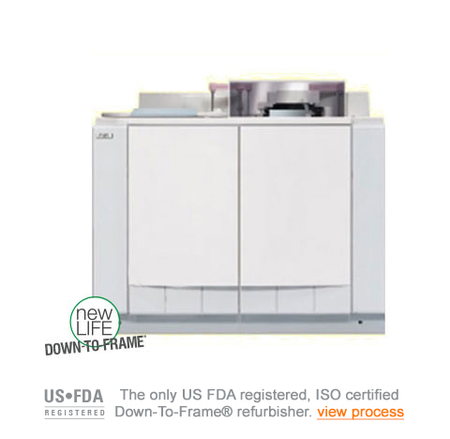
Long before the Cobas name became synonymous with Roche automation, the Modular Analytics platform set the standard for consolidated clinical chemistry. Built on Hitachi's proven chemistry engine, the Modular series paired a shared core unit with interchangeable analytical modules, letting laboratories scale photometric capacity without replacing their entire chemistry footprint.
Today, the Roche Modular P800 chemistry module remains a dependable, high-volume photometric workhorse for laboratories that need serious throughput without the price tag of a brand-new automated line. Whether running as a standalone chemistry system or as part of a larger Modular core configuration, the P800 continues to earn its place in mid-to-high volume labs.
Here are 5 reasons laboratory directors continue to rely on the Roche Modular P800 for their core chemistry needs.
1. Serious Photometric Throughput
The P800 module is built for volume. Configured on its own, it delivers up to 800 tests per hour, and when paired with the Modular core unit and an ISE module, combined test throughput can scale up to 1,700–2,600 tests per hour depending on configuration. For reference laboratories and hospital core labs running heavy daily chemistry volumes, that kind of photometric capacity keeps turnaround time (TAT) predictable even during peak ordering hours.
2. A Broad, Open Assay Menu
The P800 supports a menu of roughly 94 assays, spanning enzymes, lipids, proteins, therapeutic drugs, and drugs of abuse. Because it runs on Roche's open reagent system, laboratories retain flexibility in reagent sourcing, an operational advantage for facilities managing tight cost-per-test budgets without sacrificing assay breadth.
3. True Modular Scalability
The defining feature of the Modular Analytics platform is its architecture. The P800 photometric module connects to a shared core unit alongside ISE modules and, in larger configurations, additional analytical modules like the D2400. This means a laboratory can size its chemistry line to its actual volume, expanding capacity by adding modules to the existing core rather than purchasing an entirely new analyzer as demand grows.
4. Reliable STAT Prioritization
Emergency and inpatient samples do not wait for a batch run to finish. The P800 includes a dedicated STAT port, allowing urgent samples to be loaded and prioritized without disrupting the routine testing queue. For hospital labs balancing outpatient chemistry volume against emergency department demand, this keeps critical results moving without bottlenecking the rest of the line.
5. Proven Reliability at a Fraction of New-System Cost
While Roche has shifted its current commercial focus to the Cobas 8000 series, the Modular P800 remains a mechanically robust, well-understood platform with a long service history. For laboratories not ready to invest in a full Cobas automation line, a certified refurbished P800 delivers the same core photometric performance at a significantly lower acquisition cost, freeing up capital for other priorities.
Scale Your Core Lab Chemistry Without the New-System Price Tag
At Diamond Diagnostics, we help laboratories extend the value of proven chemistry platforms like the Modular series.
Every Roche Modular P800 we supply undergoes our complete Down-To-Frame® refurbishment protocol, including full disassembly, component-level restoration, and rigorous multi-level quality control validation, so your lab gets day-one analytical confidence at a fraction of new-system cost.